Seawater conversion is commonly known as desalination or desalting. The processes by which this is accomplished may vary according to the available power source, which can range from solar energy to thermal and electrical energy, to nuclear power. The cheaper the power source, the more attractive and economical would be the prospect of seawater desalination for extending potable water supplies.
A large number of variations, several dozen, of the main categories of desalination processes have been developed over the decades, mainly for the conversion of seawater. There are three main categories of desalination processes, namely, those based on evaporation, freezing and diffusion principles.
Under this category is designated those processes where the saline feed water is evaporated, boiled or flashed, by heat addition, and the evaporate condensed by heat extraction into the distillate as pure (desalinated) product water, with brine as a waste product. The following evaporation processes are commonly used:
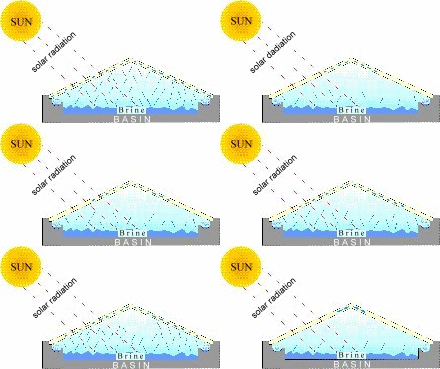
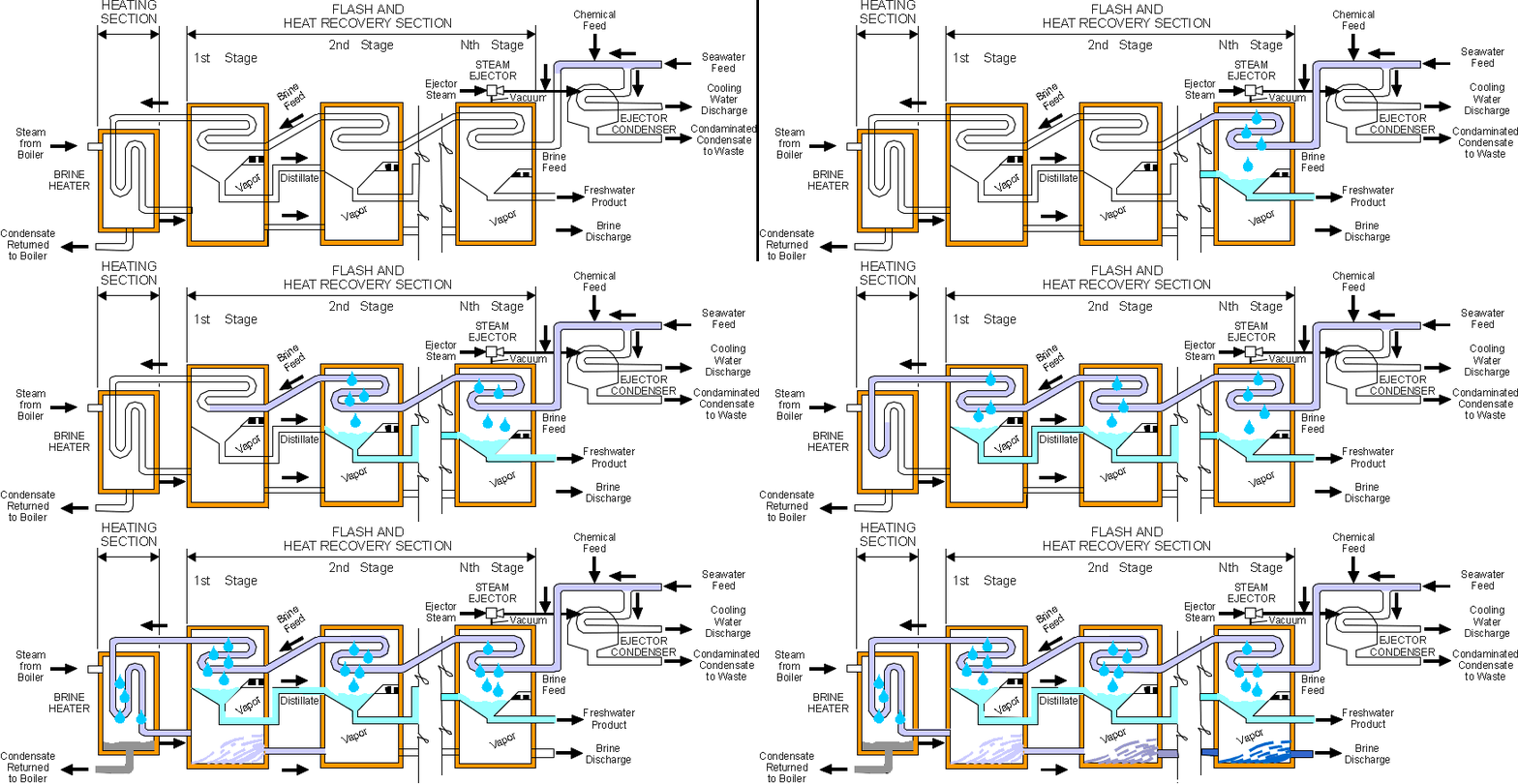
Power sources for all these processes involve heating, with some degree of waste heat utilization, as a source of power recovery. These processes require large amounts of thermal energy and are favored in places where surplus power is freely available, or where thermal energy is cheap. Brine, as a by-product, may either be disposed of, or be used for salt recovery.
Freezing processes are those where heat is extracted from the saline feed water until part of it becomes crystallized into pure water-ice granules, which are then separated from the residual brine, and melted into fresh product water. Some of the heat extracted in the freezing cycle may be recovered and utilized in the melting stage.
The following freezing processes are available:
Under diffusion, those processes are considered whereby the fresh product water is separated from the saline feed water by means of a hydrophobic or semipermeable membrane. The feed water, as a result of the extraction of freshwater, is gradually converted into brine. The separation is done either by electrical means (electrodialysis) or by reverse osmotic pressure (reverse osmosis).
The diffusion processes briefly involve the following principles:
Subscribe to read more about other Aspects of Desalting


